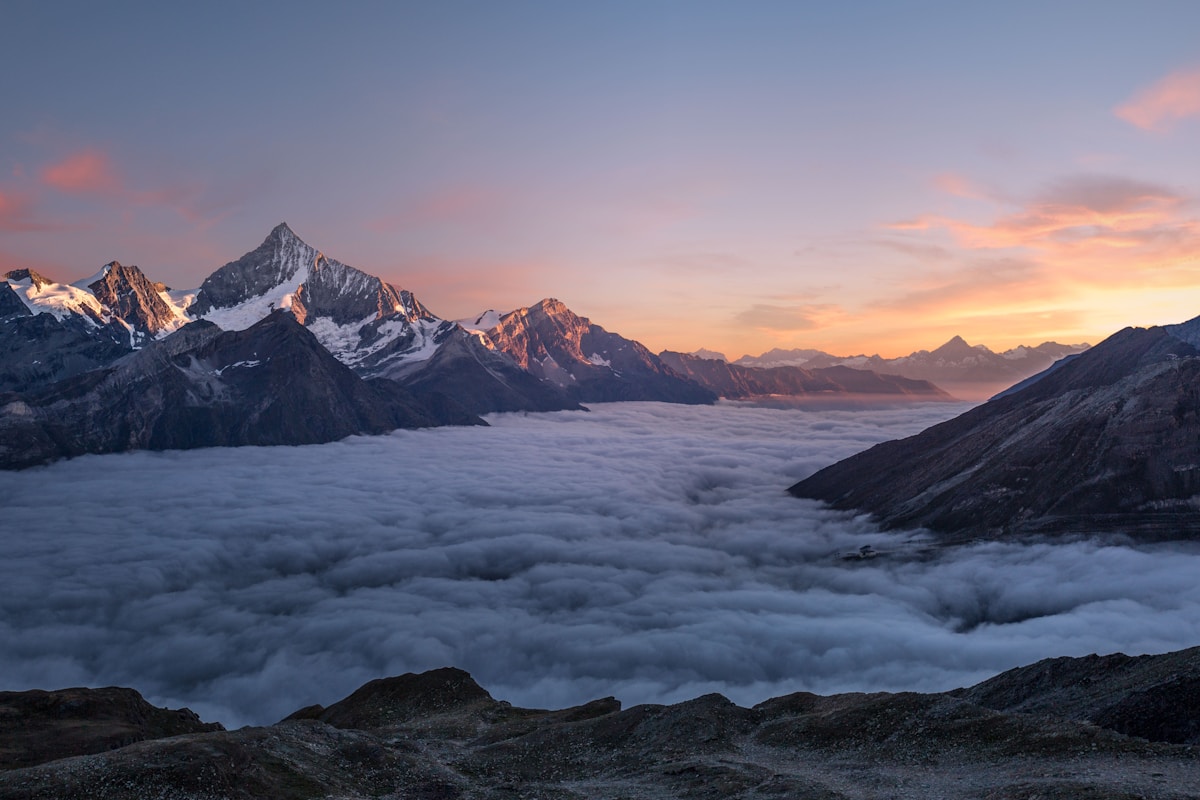
There is a particular breed of silence that exists only above the tree line. At 3,100 meters, perched along the ridgeline overlooking the Gorner Glacier, the persistent static of modern life vanishes. There are no notifications, no hum of traffic, no urgency to respond. Just the crystalline bite of glacial wind and the rhythmic cadence of trekking poles striking granite.
The Allure of the High Passes
Beginning in the quiet morning hours at Zermatt, the climb through the pine forests feels familiar. But as the larch trees thin and the raw moraine reveals itself, the scale of the landscape dwarfs every human concern. The Matterhorn looms on the horizon—not merely as a postcard silhouette, but as an ancient, indifferent pyramid of rock and ice.
"In the mountains, you realize that humility is not an emotion you manufacture—it is the natural state of standing before eternity."
Trekking solo carries its own psychological rhythm. During the first two hours, your mind replays old conversations, unresolved pull requests, and pending tasks. By hour four, the internal chatter dissolves into physical presence: the depth of your breath, the stability of your footing, and the sheer saturation of alpine wildflowers clinging to scree slopes.
Essential Gear for High Alpine Solitude
Traversing unpredictable alpine weather requires discipline in packing. Every gram carried across 1,400 meters of vertical gain is felt in your knees by midafternoon:
- Layering Strategy: A 200gsm merino wool base layer paired with a technical fleece and a lightweight Gore-Tex shell.
- Hydration & Nutrition: 2.5 liters of filtered water with electrolyte tablets, nuts, dried figs, and dark chocolate.
- Navigation: Offline topographic maps downloaded on GPS along with an analog compass and physical contour map.
- Footwear: Broken-in stiff-soled alpine boots with Vibram outsoles to navigate slick moraine scree.
Reflections from the Mountain Hut
As twilight turned the summit ridges into burning rose gold, I reached the refuge. Sitting on the timber terrace with a bowl of barley soup and black tea, fellow trekkers from Switzerland, Japan, and Canada exchanged quiet nods. No one was eager to break the calm.
We spend so much of our waking lives reacting to synthetic emergencies. Taking yourself into the wild is not an act of escapism; it is an act of reclamation. When you return down to the valley, the world has not changed—but your relationship to the noise within it has.